
A fermentáció és a lievito madre mindenkinek mást jelent: van, akinek tudomány, másnak intuíció, türelem vagy kreativitás.
Számodra mit jelent igazán ez a világ?
Számomra a kovász egy lenyűgöző és nagyon vonzó világ, mert annak tanulását soha nem lehet befejezni. Nagyon kényes egyensúlyról van szó, és elég egy kis hiba az időzítésben vagy a hőmérsékletben ahhoz, hogy felboruljon az egyensúly.
A csoportodban nagyon érződik, hogy nem egyszerűen válaszokat szeretsz adni, hanem gondolkodásra ösztönözni az embereket: kérdezel, beszélgetéseket indítasz, más szakembereket is bevonsz.
Mit jelent számodra ez a szakmai párbeszéd a fermentáció világában? És szerinted mennyit tanulhatunk egymástól?
A csoportomban beszélgetéseket indítok a kovászról, mert úgy gondolom, hogy különböző kezelési módszerek léteznek, nem csak a víz és a liszt, hanem az a hely is számít, ahol felfrissítik. Számít a páratartalom mértéke és főleg az ember — mi magunk is befolyásoljuk az egyensúlyát. Szeretek más emberekkel tapasztalatot cserélni, mert talán új módszereket tanulok meg, vagy megoldásokat ismerek meg egy olyan problémára, amivel én még esetleg nem találkoztam. Azon a véleményen vagyok, hogy a megosztás fontos dolog ahhoz, hogy együtt fejlődjünk; kipróbálhatsz valami újat, de mindenekelőtt megtanulod, hogy nem csak egyetlen út létezik, hanem tényezők összessége vezet egy jó eredményhez.
A posztjaidban gyakran látszik, hogy nem igazán hiszel az abszolút igazságokban, inkább a folyamatok és az egyensúly mögötti logikát szereted megérteni.
Szerinted miért fontos úgy tekinteni a lievito madréra, mint egy élő rendszerre — ahelyett, hogy egyszerűen csak szabályokat kövessünk?
Igen, a kovász egy élő rendszer. Lehet ugyan irányítani az egyensúlyát, de a fontos dolog az, hogy megértsük, hogyan működik, és megpróbáljuk a megfelelő dolgokat tenni vele ahhoz, hogy sikerüljön elkészíteni vele a kívánt terméket. A merev szabályok nem mindenkinél működhetnek ugyanúgy, mert számít az a környezet is, ahol etetik a kovászt, a páratartalom százaléka, a saját kovászod összetétele és főleg az az ember is, aki felfrissíti, mivel az érzékeink nem egyformák. Ami neked túl savanyú, az számomra megfelelő lehet, mert én másképpen érzékelem ugyanazt. A merev szabályok nem jók a kovászhoz.
A lievito madre kezelésében sokan a kontrollt keresik, miközben maga a fermentáció egy élő, folyamatosan változó folyamat.
Hol van szerinted az egyensúly az irányítás és az alkalmazkodás között?
Igen, a fermentáció egy élő folyamat, de ha megérted, hogyan működik egy adott liszt, egyszerűbb eldönteni, mit kell tenni. A liszt diktál — ha egyszer megérted a liszt tulajdonságait, a fermentációs folyamat irányítása már szinte gyerekjáték.
Ma egyre többen támaszkodnak paraméterekre, hőmérsékletre, pH-ra és különböző mérésekre.
Szerinted hol marad helye az intuícióknak és a tapasztalatnak?
Nagyon fontos követni bizonyos paramétereket, de rugalmasnak is kell lenni. A hőmérséklet és a hidratáció rengeteget számít, de az idő is fontos. A pH lényeges, de soha nem fogja megmondani, hogy a kovászod kiegyensúlyozott-e — viszont segíthet megérteni, milyen irányba működik. Az intuíció tapasztalat nélkül nem vezet sehova.
Sokan a lievito madre „erejét” látványos növekedésben vagy extrém alveolaturában keresik.
Számodra mi az első valódi jele annak, hogy egy madre valóban egészséges és egyensúlyban van?
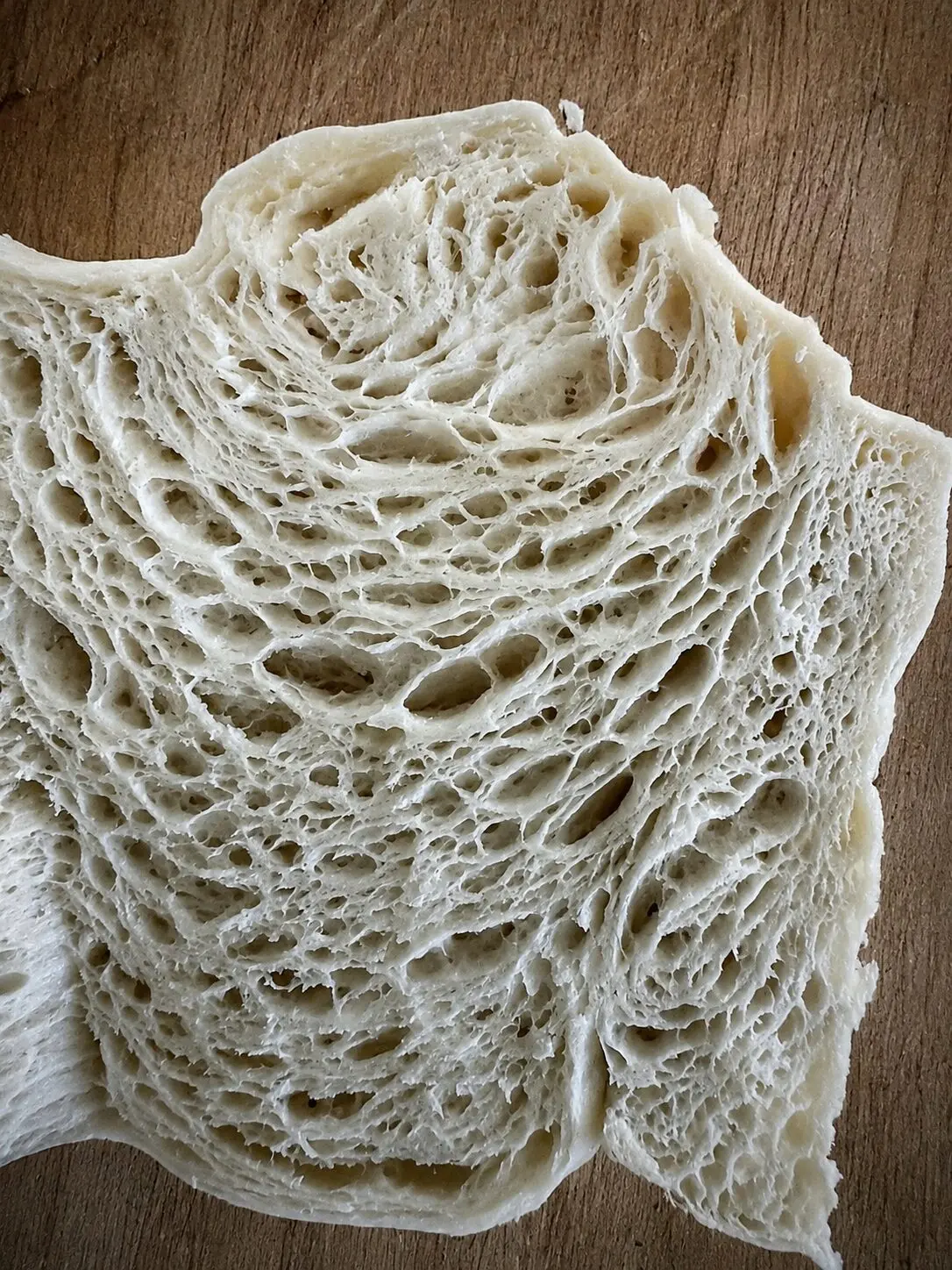
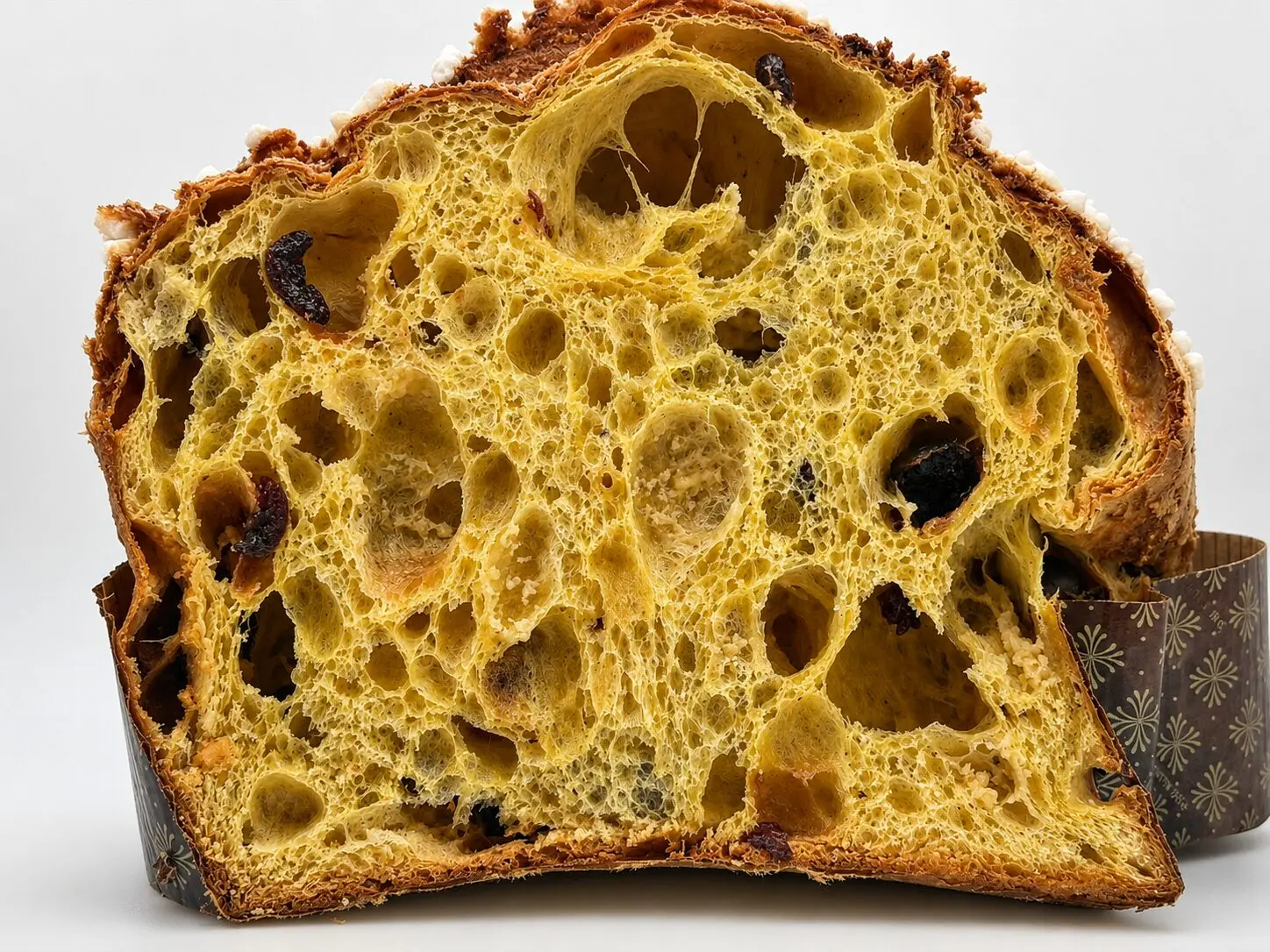
Számomra, ha meg akarom érteni, hogy jól dolgozik-e a kovászom, nem csak annak térfogata és illata fontos, hanem amellett az is, hogy könnyű legyen és ne nehéz. Amikor a háromszorosára nőtt, és könnyűnek, levegővel telinek érzem, akkor biztos vagyok benne, hogy jól dolgozik. Az alveolatura (a madre belső szerkezeti struktúrája) milyensége gyakran attól függ, hogyan dolgozzák fel a tésztát, ezért az nem mindig az egészség jele vagy szinonimája.
Az évek során rengeteget kísérleteztél, teszteltél és újragondoltál különböző megközelítéseket a lievito madre és a panettone világában.
Visszanézve, volt olyan szakmai meggyőződésed, amiről ma már azt mondod: „akkor ezt teljesen másképp láttam”?
Igen, sok mindent kipróbáltam az évek során: sok módszert, sokféle panettone-típust, mind nagyon érdekes volt. Többször is megváltozott a szemléletem, de nem azért, mert egy módszer jobb vagy rosszabb lett volna a másiknál, hanem mert az évek során megváltozott az elképzelésem arról, milyen terméket szeretnék.
A zárt chatben évekig rengetegen írtak Neked madre képekkel, kérdésekkel, problémákkal, néha már-már pánikban — Te pedig elképesztő türelemmel segítettél sok embernek megérteni, mit miért látunk, és miért tesszük azt, amit teszünk.
Szerinted mi a legnehezebb dolog, amit igazán meg kell tanulni ebben a világban? És mikor érzed azt: „oké, most már tényleg megértette”?
A legnehezebb dolog megérteni, mikor változik meg a kovász egyensúlya, és mit kell tenni ahhoz, hogy korrigáljuk az irányt. A 100%-os kontrollt úgysem lehet soha elérni, de menet közben tudunk igazítani a dolgokon annak alapján, ahogyan dolgozik. Aki azt gondolja: „na most már mindent megértettem, és teljes kontrollom van”, az szerintem semmit sem értett meg a kovászból.
Magyarországon egyre többen fordulnak a természetes fermentáció, a kovászolás, a kenyérsütés és már specifikusan a panettone világa felé is.
Mit üzennél a magyar sütőknek és azoknak, akik szeretnének mélyebben elmerülni ebben a világban?
A természetes kelesztés nagyon érdekes, de ugyanúgy érdekes a sörélesztős kelesztés is. Mindkét módszerrel lehet élvezettel dolgozni és kísérletezni. A panettone a lehető legbonyolultabb termék, mert nem csak vízből és lisztből áll. Azok, akik elkezdik készíteni, ritkán tudják abbahagyni. Ezért mindenkinek, aki szeretné kipróbálni, azt mondom: ne adjátok fel, ha elsőre nem sikerül a termék. Mindannyian átéltünk kudarcokat, de éppen ezek által tanulunk meg igazán dolgokat!
Fermentation and sourdough mean different things to different people: for some it’s a science, for others it’s intuition, patience or creativity.
What does this world really mean to you?
For me, sourdough is a fascinating and deeply rewarding world because there’s always something new to learn. It’s all about a delicate balance, and even the slightest mistake in timing or temperature can be enough to throw that balance off.
It’s very clear from your group that you don’t just like giving answers, but that you want to encourage people to think: you ask questions, start discussions and involve other experts as well.
What does this professional dialogue within the world of fermentation mean to you? And how much do you think we can learn from each other?
I like to start discussions about sourdough in my group because I believe there are many ways to work with it. It’s not just about the flour and the water—the environment in which the starter is maintained and refreshed also has a significant impact.
Humidity plays a role, but above all, people do—we ourselves influence its balance.
I enjoy sharing experiences with other people, because I might learn new methods or discover solutions to problems, I haven’t yet come across myself.
I believe that sharing knowledge is essential if we want to grow together. You can try new approaches, but more importantly, you learn that there is no single right way. A great result is achieved through a combination of many different factors.
It often comes across in your posts that you don’t really believe in absolute truths. Instead, you’re more interested in understanding the logic behind the processes and the balance that make things work.
Why do you think it’s important to view the lievito madre as a living system — rather than simply following rules?
Yes, sourdough is a living system. While it is possible to manage its balance, the important thing is to understand how it works and how to work with it so that we can successfully create the product we want. Strict rules cannot always be applied in the same way by everyone, because many factors influence the process: the environment in which the sourdough is refreshed, the level of humidity, the composition of the starter itself, and above all, the person who maintains it. Our senses are different, and we each perceive and respond to the sourdough in our own way.
What tastes too sour to you may be perfectly balanced for me, because we don’t necessarily perceive the same thing in the same way. Rigid rules are not the right approach when it comes to sourdough.
When it comes to managing sourdough starter, many people seek control, whilst fermentation itself is a living, constantly changing process.
Where do you think the balance lies between control and adaptation?
Yes, fermentation is a living process, but once you understand how a particular flour behaves, it becomes much easier to decide what adjustments to make. The flour guides the process — and once you understand its properties, managing fermentation becomes much more intuitive.
Nowadays, more and more people are relying on parameters, temperature, pH and various measurements.
Where do you think there is room for intuition and experience?
It’s very important to monitor certain parameters, but you also need to remain flexible. Temperature and hydration play a major role, but time is equally important. pH is a useful indicator, but it will never tell you on its own whether your sourdough starter is truly balanced — it can only help you understand the direction it is moving in. Intuition alone, without experience, will not get you very far.
Many people associate the “strength” of lievito madre with visible growth or an extreme level of alveolation.
What do you think is the first true indication that a lievito madre is healthy, active, and in balance?
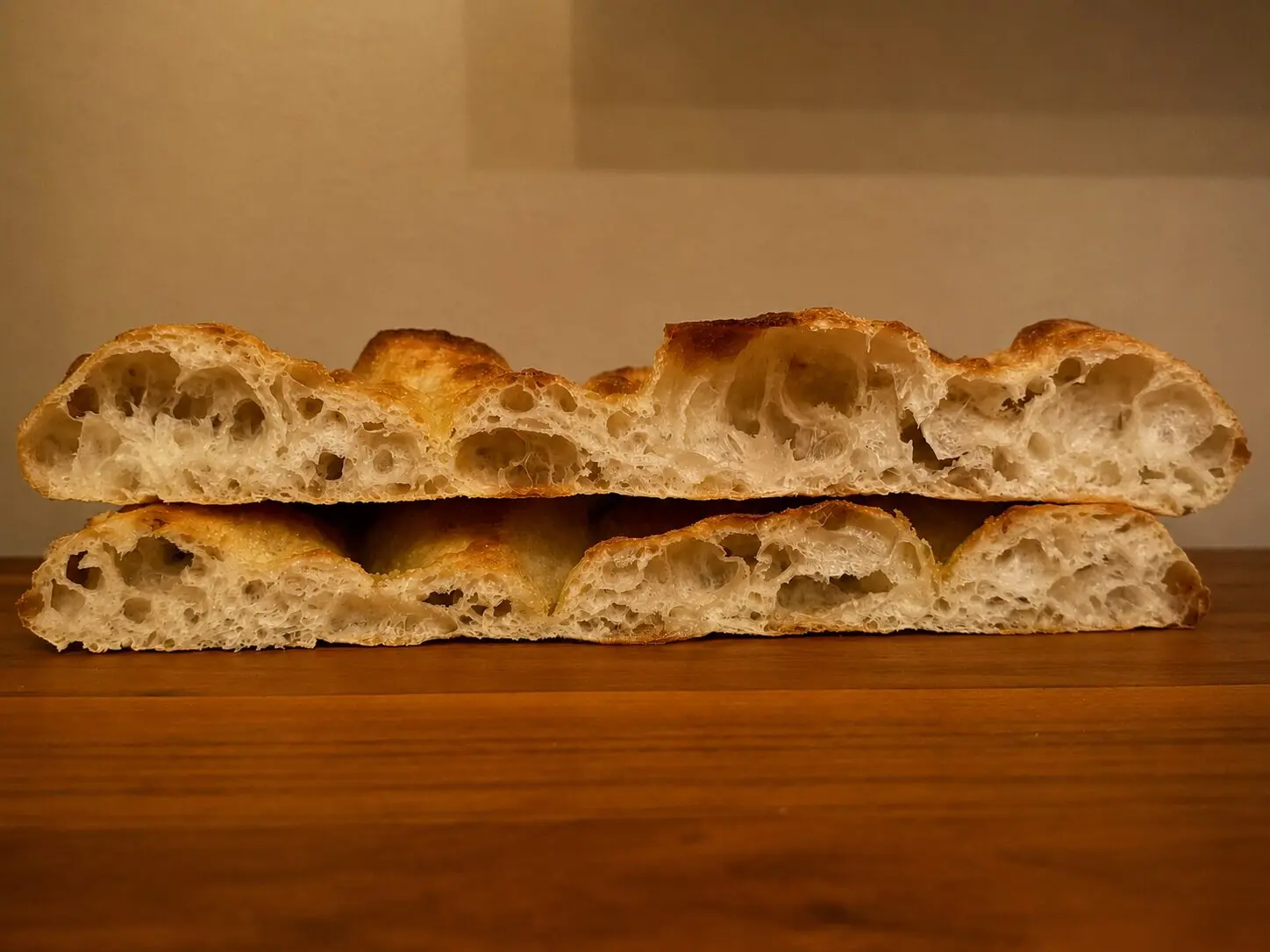
For me, when I want to understand whether my sourdough starter is truly healthy, I don’t look only at its volume and aroma. Its texture is just as important — it should feel light, lively, and full of activity rather than heavy and dense. When it has tripled in size and feels light and airy, I can be confident that it is working well. The quality of the alveolatura (the internal structure of the madre) often depends on how the dough is handled, so it is not always a sign of — or synonymous with — good health.
Over the years, you have explored, tested, and re-evaluated many different approaches in the world of lievito madre and panettone.
Looking back, was there a professional belief or conviction you held at the time that you would now say, “I see that completely differently today”?
Yes, I’ve tried many different things over the years: many different methods and many different types of panettone — and each one was truly interesting. My approach has changed several times, but not because one method was better or worse than another, but because, over the years, my idea of what kind of product I wanted to create has changed.
For years, countless people wrote to you in the private chat with pictures, questions and problems, sometimes almost in a state of panic – And with incredible patience, you helped so many people understand what we were seeing, why we were seeing it, and why we were doing what we were doing.
What do you think is the most difficult thing we truly have to learn in this world? And when do you feel that someone has genuinely understood it?
The hardest thing to learn is recognising when the balance of the sourdough has shifted and knowing what to do to bring it back in the right direction. You can never have 100% control, but you can make adjustments along the way, depending on how it responds. I believe that anyone who thinks, “Now I understand everything and I have complete control,” has probably understood very little about sourdough.
In Hungary, more and more people are discovering the world of natural fermentation, sourdough, bread making, and now even panettone specifically.
What message would you like to share with Hungarian bakers and with those who would like to dive deeper into this world?
Natural fermentation is very interesting, but yeast fermentation is equally fascinating. Both methods can be enjoyable to work with and experiment with. Panettone is one of the most complex products you can make because it is not simply made of water and flour. Those who start making it rarely know how to stop. That is why my message to anyone who wants to try it is: don’t give up if your first attempt fails. We have all experienced failures, but it is through these experiences that we truly learn.
La fermentazione e il lievito madre significano qualcosa di diverso per ognuno: per alcuni sono scienza, per altri intuizione, pazienza o creatività.
Per te, che cosa rappresenta davvero questo mondo?
Per me il lievito madre é un mondo affascinante e anche molto attrattivo perché non si finisce mai di imparare , é un equilibrio molto delicato e basta poco per avere dei sbilanciamenti se si sbagliano tempi e temperature.
Nel tuo gruppo si percepisce chiaramente che non ti piace semplicemente dare risposte, ma far ragionare le persone: fai domande, apri confronti, coinvolgi altri professionisti.
Che valore ha per te questo confronto nel mondo della fermentazione? E secondo te, quanto possiamo imparare gli uni dagli altri?
Nel mio gruppo apro discussioni sul lievito perché penso che ci sono varie metologie di gestione , non é solo acqua e farina , anche il luogo dove viene rinfrescato incide , il tasso di umidità e sopratutto la persona , anche noi influenziamo il suo equilibrio . Mi piace confrontarmi con altre persone perché magari apprendo nuove metodiche o imparo soluzioni per un problema che magari io ancora non ho avuto . Sono del parere che la condivisione é una cosa importante per migliorarsi insieme , puoi provare qualcosa di nuovo ma sopratutto apprendi che non esiste una sola strada ma è un insieme di fattori che portano a un buon risultato.
Nei tuoi post si vede spesso che non credi troppo nelle verità assolute, ma preferisci capire i meccanismi e gli equilibri dietro le cose.
Secondo te, perché è così importante guardare il lievito madre come un sistema vivo, invece di seguire semplicemente delle regole?
Sì, il lievito é un sistema vivo , puoi controllare il suo equilibrio ma la cosa importante è capire come lui lavora e cercare di fare le cose giuste per riuscire ad ottenere il prodotto . Le regole fisse non funzionano per tutti nello stesso modo perché conta anche l‘ambiente dove viene rinfrescato , la percentuale di umidità , la composizione del tuo lievito madre e sopratutto l‘operatore che lo rinfresca , i nostri sensi non sono uguali , ciò che per te può essere troppo acido per me può essere giusto perché il mio senso lo percepisce così . Le regole fisse non vanno bene per il lievito madre.
Nel lavoro con il lievito madre molte persone cercano il controllo, mentre la fermentazione stessa è un processo vivo, in continuo cambiamento.
Secondo te, dove si trova l’equilibrio tra controllo e capacità di adattarsi?
Sì, la fermentazione é un processo vivo ma se capisci come lavora una determinata farina é più semplice decidere cosa fare . La farina comanda , una volta capito le qualità della farina condurre il processo fermentativo diventa un gioco.
Oggi sempre più persone si affidano a parametri, temperature, pH e diversi strumenti di misurazione.
Secondo te, dove trovano ancora spazio l’intuizione e l’esperienza?
É molto importante seguire dei parametri ma bisogna essere flessibili, temperatura e idratazione contano tantissimo ma conta anche il tempo , il ph é importante ma non ti dirà mai se il tuo lievito é bilanciato ma ti può far capire in che direzione lavora.
L’intuizione non va da nessuna parte senza esperienza.
Molti valutano la “forza” del lievito madre attraverso una crescita spettacolare o un’alveolatura estrema.
Per te, qual è il primo vero segnale che indica un lievito madre realmente sano ed equilibrato?
Per me la cosa importante per capire se sta lavorando bene il mio lievito oltre che al volume e agli odori deve essere leggero non pesante , quando é triplicato e lo sento leggero pieno di aria li sono sicuro che lui sta lavorando bene , l‘alveolatura spesso é dovuta a come viene lavorato quindi non sempre é sinonimo di salute.
Nel corso degli anni hai sperimentato, testato e riconsiderato molti approcci diversi nel mondo del lievito madre e del panettone.
Guardandoti indietro, c’è una convinzione professionale che oggi vedi in modo completamente diverso rispetto al passato?
Sì, ho testato molte cose negli anni , tanti metodi , tante tipologie di panettone , tutte molto interessanti , ho cambiato visione diverse volte ma non perché un metodo é migliore o peggiore ma perché negli anni la mia idea di prodotto é cambiata.
Nella chat privata tantissime persone ti hanno scritto per anni con foto del lievito, dubbi, problemi, momenti di panico — e tu con una pazienza incredibile hai aiutato tante persone a capire davvero perché vediamo certe cose e perché facciamo determinate scelte.
Secondo te, qual è la cosa più difficile da imparare davvero in questo mondo? E quando pensi: “ok, adesso ci è arrivato”?
La cosa più difficile é capire quando lui cambia il suo equilibrio e cosa fare per aggiustare il tiro , poi il controllo al 100% non lo si avrà mai ma possiamo sistemare le cose in corso d‘opera in base a come lavora . Chi pensa adesso ho capito tutto e ho il controllo per me non ha capito nulla del lievito madre.
Anche in Ungheria sempre più persone si avvicinano alla fermentazione naturale, alla panificazione e in particolare al mondo del panettone.
Che messaggio vorresti lasciare ai panificatori ungheresi e a chi desidera approfondire davvero questo mondo?
La lievitazione naturale é molto interessante ma lo é anche quella con lievito di birra , ci si può divertire con entrambi i metodi . Il panettone é il prodotto più complicato che ci possa essere perché non é solo acqua e farina , difficilmente chi inizia a farlo riesce a smettere , quindi a tutti coloro che voglio provare dico non vi arrendete se il prodotto non vi riesce , tutti abbiamo avuto dei fallimenti , ma é grazie a loro che si impara davvero!